Our Vision
I guide people who want to eat well, but cannot find the time or do not know where to start, to take the lead in their own culinary week: nutrition, cooking and organisation.
What Culinary Nutrition is
Culinary Nutrition applies the nutrition sciences to the practice of cooking. It studies how the choice of ingredients, cooking methods, pairings and storage change the nutritional value of a dish: because what happens between the shopping and the table really does change what reaches our body.
Culinary Medicine, another branch of medicine that I integrate into my work, brings this knowledge into prevention. Born in US university centres and now also present in Europe and in Italy, it combines the scientific evidence of nutrition with culinary skills and with the mechanisms that govern habit change, to turn recommendations into actions that can be practised every day.
This is where my work comes from. From restaurants and hospitality I learnt that efficient use of space, time and processes is what makes a kitchen sustainable; from the nutrition sciences, the rigour with which choices must be built. Rigour does not mean rigidity, but respect for Science. What happens within professional walls can be replicated within domestic ones, and nutrition can enter the restaurant world: making these two worlds talk to each other is my job.
And Lab, because this knowledge is learnt by doing: you try, you correct, you build your own balance.
The three cornerstones
Three skills that rarely live in the same person, and that together lead to one result: eating well, every day, on your own.
Nutrition
the why
Behind every food there is chemistry, and once it enters the body an extraordinary biochemical journey begins. Understanding what happens to food, and why one choice is worth more than another, is what makes a decision stable over time. Not rules to follow, but criteria to use: it is the difference between someone who carries out instructions and someone who chooses.
Cooking
the how
A correct recommendation that does not become a good dish does not survive the second week. The techniques of professional cooking, cooking methods, pairings and balancing the plate are what turn theory into something you want to eat. Not recipes to replicate, but techniques to apply to what you like.
Organisation
the when and the how much
From professional catering I bring what makes a kitchen sustainable: planning, shopping, preparing ahead, safe storage. When the week is organised, eating well stops being a decision to make every evening.
Taken one by one, they are three distinct bodies of knowledge. Together, in a single person, they become independence: the ability to build your own meals and your own weeks.
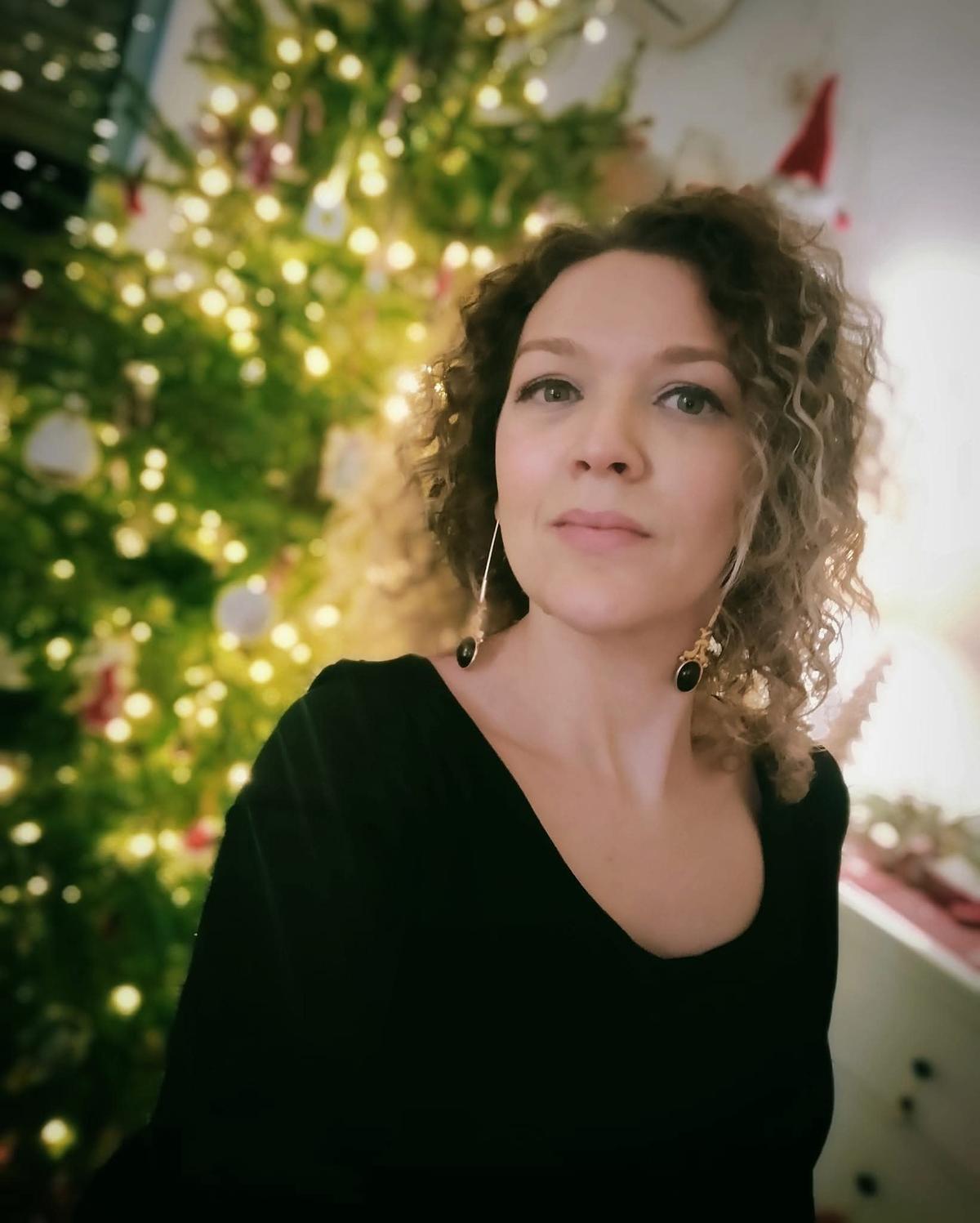
Who is behind Culinary Nutrition Lab
Marilena Cutino
Some stories are not chosen: they are inherited.
Mine begins on a wooden platform facing the sea, in Isola delle Femmine, in the province of Palermo. It was the 1960s, and there my grandmother Maria and her cousin Caterina made the first pizza in the village. No one had ever made pizza in Isola delle Femmine before.
It continues with my father Giuseppe, who opened his pizzeria ten days before I was born, as if he wanted to make sure my first breath was already taken in the air of a kitchen. Growing up in a restaurant does not just mean learning to walk between the tables: it means absorbing a way of being in the world, in which food is language, relationship, identity.
That family story shaped me, but at some point it was no longer enough. I felt that tradition deserved to be taken further, into wider, more challenging contexts, richer in meaning. My degree in International Relations gave me the tools to do it: so I became Food & Beverage Director for international hotel brands, in Muscat in Oman, in Istanbul and finally in Almaty, in Kazakhstan. In Kazakh, Almaty means "apple": the city of apples, where food is the common thread even in the name of the city that hosted me for three years. There, a major Made in Italy project confronted me with a question I could no longer ignore: even in a setting that has nothing to do with healthcare and everything to do with cooking, we can do much more with food. But we do not.
It was 2021. Everything seemed to work: the numbers added up, Executive Chef Gianluca's kitchens ran well, the front of house and my assistant Alex looked after the guests, the guests were satisfied. And yet something essential was missing. In those large international settings, food was managed with managerial precision and complete safety, but its effects on health never entered the conversation: reduced to a compliance obligation, an audit to pass, a few products for special diets added to the menu to meet a standard. With Danilo, the hotel manager, who cared about health and sustainability, we did what we could. But the problem was, and is, cultural: food is a multidisciplinary subject and we keep treating it in separate compartments, when in fact each skill completes the other.
That is when I decided to study Nutrition. I started with the Master in Culinary Nutrition, which I was admitted to on the strength of my career in restaurants and hospitality, and it was that which made me realise I wanted to go all the way. The following year, in 2022, I enrolled at university: first Food Science and Gastronomy, then the master's degree in Human Nutrition Sciences.
In my sector, Food & Beverage direction, especially across several properties, is the highest point you can reach: beyond it there is hotel management, which never attracted me. Nor did cooking, to be honest. Perhaps because the family already had its chefs: my grandmother, my father and my brother Francesco, today Culinary Developer for Qatar Airways. Someone was needed to organise things and people, while my mother Rosaria looked after the premises. That someone became me.
Culinary Nutrition Lab was born from this path. Culinary Nutrition, together with the principles of Culinary Medicine, is for me the most coherent synthesis of everything I have done, personal, professional and academic. It brings together what I have always known how to do, being in a restaurant, organising it, giving it meaning, with what I chose to study, nutrition, to put it at the service of people and of the world I come from. It is the approach that best answers the question I have carried with me for years: how do you turn scientific knowledge into real, everyday, lasting change?
There is no clear-cut answer. But there is a rigorous approach, grounded in evidence and deeply human, that starts from the kitchen and arrives at health.
Today this is my work: helping people to know food better, to cook better, to organise themselves better, to eat mindfully at home and away; to build a relationship with food that is free, informed and grounded in science. In a simple way, within everyone's reach, because behind every food there is chemistry, and once it enters our body an extraordinary biochemical journey begins. My profession confirms it every day: knowing food, from harvest to plate, together with constant guidance and support and planning meals ahead, leads to adherence. And adherence leads to results that last.
Nutrition, cooking and organisation: this is the thread that links every stage of my story, and that today I make available to those who choose to work with me. To people who are well and want to stay healthy, but struggle to find the time and organisation to do so. To people who need to pay attention to what goes on their plate every day, and need the guidance they have received to become real meals. And to restaurants, hospitality and catering businesses that want to bring nutrition into their kitchens.
My path, step by step
1960s · Isola delle Femmine
The first pizza in the village, made by grandmother Maria and her cousin Caterina
1982
Dad's pizzeria: Giuseppe opens it ten days before I am born
2002–2012 · Rome
Restaurant Manager and degree in International Relations
2012–2017 · Palermo
Restaurateur: in my father's restaurant and in my own, opened together with my brother
2017–2022 · Muscat, Istanbul, Almaty
Food & Beverage Director in international hospitality
2021 · Almaty
The question: we can do much more with food, but we do not!
2021–2026 · Back to studying
Master in Culinary Nutrition, bachelor's degree in Food Science and Gastronomy, master's degree in Human Nutrition Sciences
2023–2026 · Bologna
Cucina Evolution: food consultant and coordinator of the Longevity Evolution Program
Since 2024 · Florence
Teacher at Le Cordon Bleu
Today
Culinary Nutrition Lab
The first step is getting to know each other: tell me about your days, your kitchen and your goals.
Find out which programme is right for you